Research Projects
The BRAIV Lab studies how aging reshapes the neurovascular unit and drives vulnerability to neurodegeneration, with a central focus on white matter degeneration, glial dysfunction, neurovascular injury, and iron-mediated cell death pathways. Our long-term goal is to identify mechanistic targets that can preserve brain resilience and cognitive function during aging.
The lab combines experimental neuroscience, advanced imaging, quantitative histopathology, and translational neurobiology to study how vascular dysfunction, immune dysregulation, and metabolic stress converge in aging brains.
White Matter Aging and Degeneration
White matter degeneration is increasingly recognized as a major contributor to cognitive decline and dementia. The BRAIV Lab studies how aging disrupts oligodendrocyte lineage biology, myelin integrity, and white matter repair capacity.
Current areas of focus include:
- Mechanisms of remyelination failure in aging
- Oligodendrocyte lineage vulnerability to metabolic stress
- Cellular pathways driving progressive white matter injury
- Interactions between glial dysfunction and axonal degeneration
Our work integrates human tissue analysis, experimental disease models, and quantitative imaging approaches to better define mechanisms underlying white matter vulnerability in aging and Alzheimer’s disease (Adeniyi et al., Annals of Neurology (2023); Bagi et al., GeroScience (2022)).
Microglial Biology, Neuroinflammation, and Ferroptosis
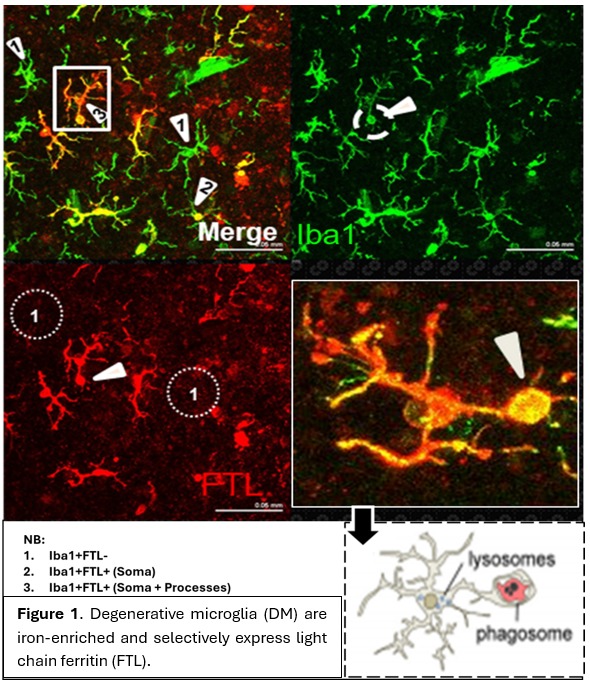
Microglia play critical roles in maintaining brain homeostasis, yet aging-associated microglial dysfunction can promote chronic inflammation and neurodegeneration. A major research direction in the BRAIV Lab is understanding how iron dysregulation and ferroptosis contribute to microglial pathology and white matter degeneration.
Research themes include:
- Iron-enriched microglial states in aging brains
- Ferroptotic pathways in neurodegeneration
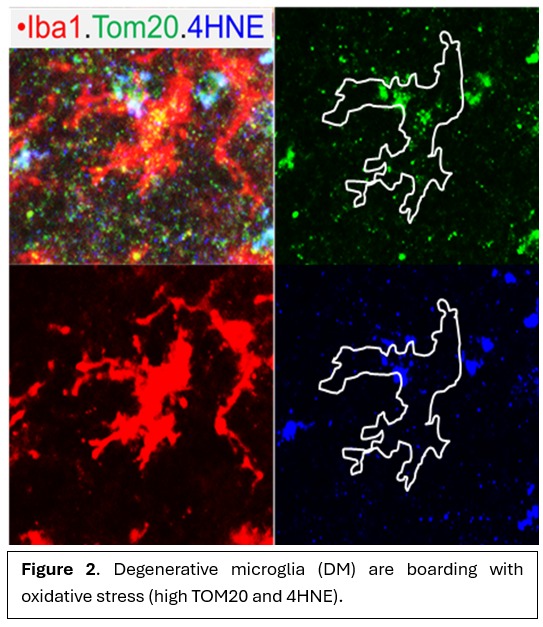
- Oxidative stress and lipid peroxidation in glial injury
- Neuroimmune interactions in white matter disease
Our recent work identified ferroptosis as a key mechanism associated with microglial degeneration in aging human white matter injury (Adeniyi et al., Annals of Neurology (2023); Ogundele et al., Metabolic Brain Disease (2014)).
Neurovascular Biology and Brain Aging
The BRAIV Lab investigates how vascular dysfunction contributes to neural injury and cognitive decline. We are particularly interested in the relationship between cerebral microvascular integrity, blood–brain barrier dysfunction, and white matter degeneration.
Key questions include:
- How does vascular aging alter white matter homeostasis?
- What mechanisms connect microvascular dysfunction to neurodegeneration?
- How do glial and vascular interactions shape disease progression?
Our work combines neuropathology, vascular biology, and imaging-based approaches to study the aging neurovascular unit (Bagi et al., GeroScience (2022); Ogundele et al., Pathophysiology (2014)).
Advanced Imaging, Quantitative Neuropathology, and Spatial Biology
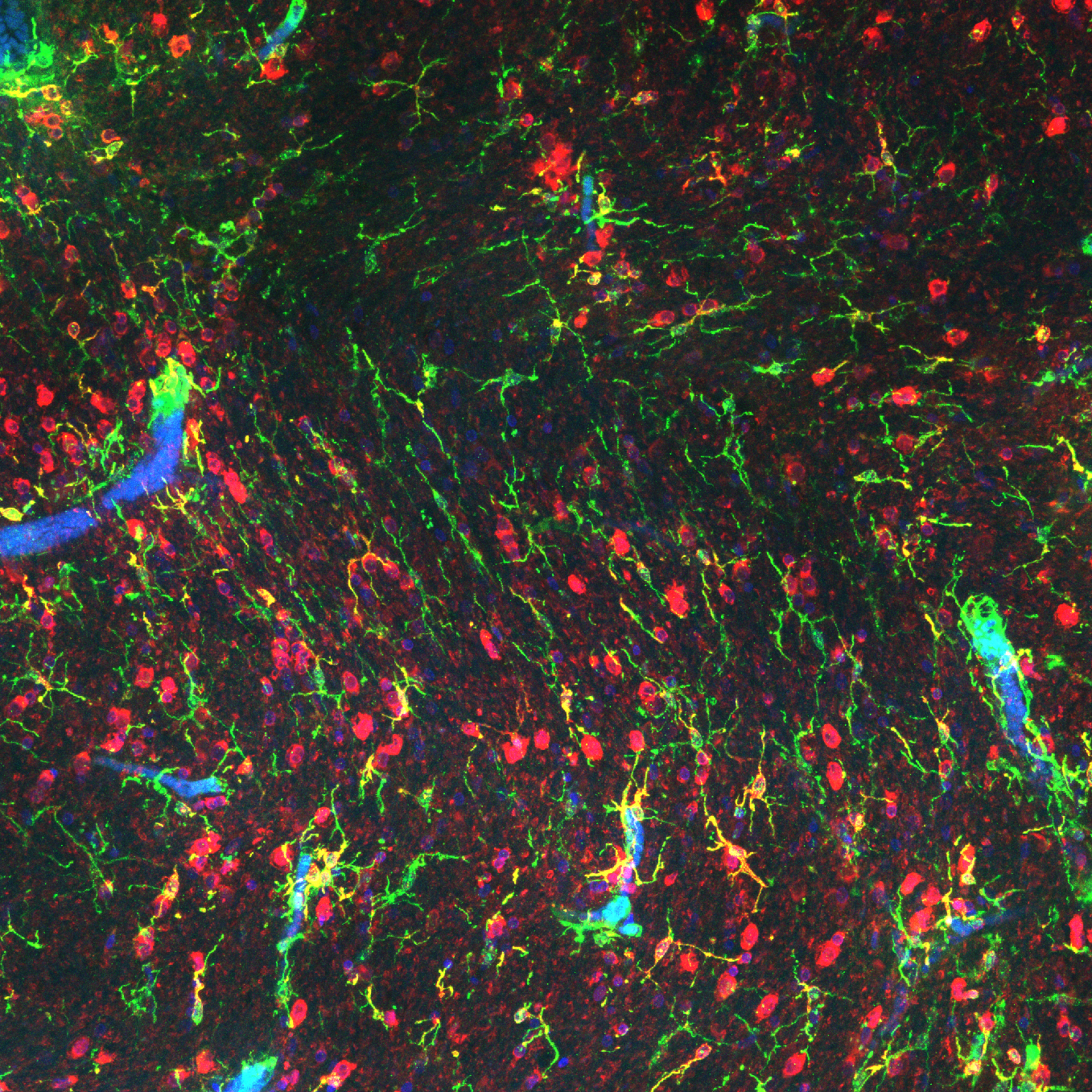
A major strength of the BRAIV Lab is the integration of advanced imaging and quantitative tissue analysis to study cellular pathology in aging brains. The lab utilizes immunofluorescence, confocal microscopy, image-based quantification, stereology, and multispectral imaging approaches to investigate neurodegenerative mechanisms at high spatial resolution.
Current and emerging methodological directions include:
- Multiplex immunofluorescence and multispectral imaging
- High-resolution confocal microscopy
- Quantitative neuropathology and morphometric analysis
- In situ hybridization approaches
- Spatially resolved cellular profiling
- Integration of imaging with computational and data-analytic workflows
The BRAIV Lab is actively expanding toward next-generation spatial biology approaches, including spatial immunohistochemistry (spatial IHC), multiplex spatial profiling, and advanced tissue mapping technologies to better define cellular interactions within aging white matter and neurovascular niches (Adeniyi et al., ASN Neuro (2022)).
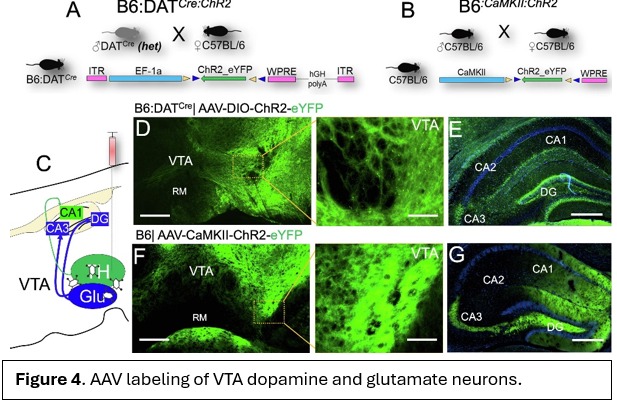
Neural Circuitry and Functional Connectivity
The BRAIV Lab is also interested in how aging and neurodegeneration alter neural circuit organization and communication across brain regions.
Research directions include:
- Circuit-level mechanisms underlying cognitive dysfunction
- Glutamatergic and dopaminergic network organization
- Functional connectivity changes during neurodegeneration
- Synaptic vulnerability in aging-related disease states
These studies provide mechanistic insight into how cellular pathology translates into network dysfunction and behavioral impairment (Shrestha et al., JoVE (2020); Adeniyi et al., Neuroscience (2020)).
Future Direction
The BRAIV Lab is building an interdisciplinary framework that connects vascular biology, glial dysfunction, iron metabolism, and white matter integrity into a unified model of brain aging and neurodegeneration.
Our future vision includes:
- Developing spatially resolved maps of aging white matter pathology
- Integrating spatial biology with molecular and imaging approaches
- Identifying early biomarkers of neurovascular and white matter vulnerability
- Defining therapeutic targets that promote resilience during brain aging
- Advancing translational strategies for Alzheimer’s disease and vascular dementia
By integrating emerging imaging technologies with mechanistic neuroscience, the BRAIV Lab aims to move beyond descriptive pathology toward predictive and intervention-focused models of brain aging.